

IT Cybersecurity
Social Engineering
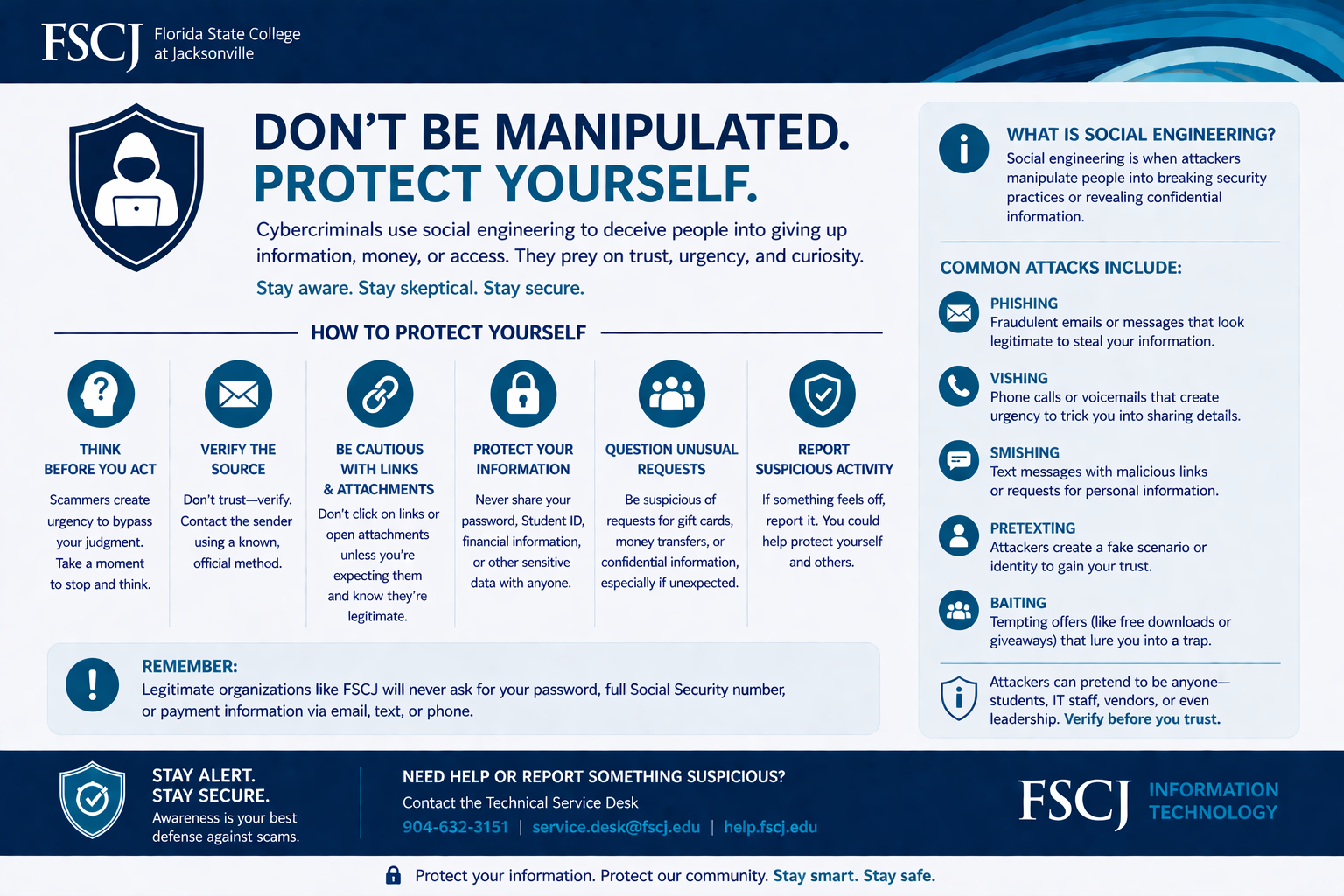
Cybercriminals use social engineering to deceive people into giving up information, money, or access. They prey on trust, urgency, and curiosity.
Stay aware. Stay skeptical. Stay secure.
-
Social engineering is when attackers manipulate people into breaking security practices or revealing confidential information.
-
Think Before You Act: Scammers create urgency to bypass your judgement. Take a moment to stop and think.
Verify The Source: Don’t trust; verify. Contact the sender using a known, official method.
Be Cautious With Links and Attachments: Don’t click on links or open attachments unless you’re expecting them and know they’re legitimate.
Protect Your Information: Never share your password, Student ID, financial information, or other sensitive data with anyone.
Question Unusual Requests: Be suspicious of requests for gift cards, money transfers, or confidential information, especially if unexpected.
Report Suspicious Activity: If something feels off, report it. You could help protect yourself and others.
-
Phishing: Fraudulent emails or messages that look legitimate to steal your information.
Vishing: Phone calls or voicemails that create urgency to trick you into sharing details.
Smishing: Text messages with malicious links or requests for personal information.
Pretexting: Attackers create a fake scenario or identity to gain your trust.
Baiting: Tempting offers (like free downloads or giveaways) that lure you into a trap.
Attackers can pretend to be anyone; Students, IT Staff, Vendors, or even your leadership. Verify before you trust.
-
Legitimate organizations like FSCJ will never ask for your password, full social security number, or payment information via email, text or phone.